
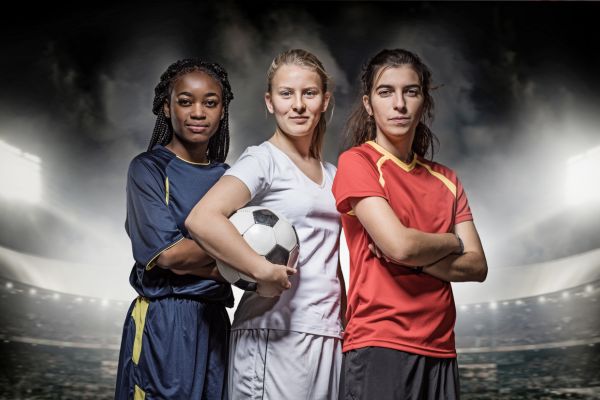
For decades, sports pages, highlight reels, and prime-time broadcasts have followed a familiar script. Men’s leagues dominate airtime. Men’s achievements are framed as historic. Men’s athletes are treated as the default heroes of sport. Meanwhile, women’s sports have existed in a quieter corner of the media landscape, often celebrated briefly during major tournaments and then left waiting for the next moment of attention.
That imbalance is no longer going unchallenged. Women’s sports media coverage is evolving—sometimes unevenly, sometimes slowly, but undeniably forward. What’s changing isn’t just how often women’s sports are shown. It’s how they’re discussed, valued, and remembered.
How the Coverage Gap Took Shape
The roots of limited women’s sports media coverage run deep. Historically, sports journalism developed alongside male-dominated leagues and institutions. Editors, broadcasters, and decision-makers largely mirrored the demographics of the sports they covered. As a result, women’s competitions were treated as secondary, niche, or “special interest” content rather than part of the main sporting narrative.
This created a feedback loop. Less coverage meant smaller audiences, which was then used as justification for offering even less coverage. Over time, this cycle became normalized. Many viewers grew up rarely seeing women’s sports on television, not because the games lacked quality or drama, but because they were rarely given the chance to be seen.
Why Visibility Changes Everything
Media coverage does more than report scores. It shapes cultural memory. It decides which moments become legendary and which disappear into obscurity. When women’s sports receive consistent and thoughtful coverage, the impact goes far beyond viewership numbers.
Young athletes see futures that feel attainable. Fans form emotional connections to teams and players. Conversations shift from novelty to rivalry, from curiosity to loyalty. Visibility validates effort, skill, and ambition in ways that statistics alone never can.
Importantly, better coverage doesn’t require hype or exaggeration. It simply requires presence. A regular spot in sports news. A serious tone in analysis. A willingness to tell stories with the same depth afforded to men’s competitions.
Shifting Narratives in Modern Sports Media
One of the most noticeable changes in recent years has been the tone of women’s sports media coverage. Where commentary once focused heavily on appearance, personal lives, or comparisons to male athletes, many outlets are now emphasizing performance, tactics, and competitive stakes.
This shift matters. Athletes want to be known for how they play, not how they look or who they resemble. Fans want analysis that respects their intelligence. When coverage centers on skill and strategy, women’s sports are no longer framed as an alternative version of the “real” game. They are simply the game.
That said, progress is inconsistent. Some coverage still slips into outdated language or superficial storytelling. But the overall direction suggests growing awareness and accountability within sports media.
The Role of Major Events in Driving Change
Large-scale tournaments have played a crucial role in expanding women’s sports media coverage. Global competitions often force broadcasters to pay attention, if only temporarily. During these moments, audiences are reminded of the intensity, unpredictability, and emotion that women’s sports deliver.
What’s telling is what happens afterward. In some cases, coverage spikes during the event and then fades. In others, sustained interest follows, leading to expanded league coverage and deeper storytelling. The difference often comes down to editorial choices rather than audience demand.
When media outlets treat these events as gateways rather than exceptions, they help normalize women’s sports as year-round narratives instead of occasional spectacles.
Digital Platforms and the Power of Choice
Traditional broadcast media still holds influence, but digital platforms have changed who gets to decide what matters. Social media, streaming services, and independent sports journalism have opened new pathways for women’s sports media coverage to grow organically.
Athletes can now tell their own stories. Fans can follow teams without waiting for television schedules to catch up. Highlights travel faster, reach further, and live longer online than they ever did in print or broadcast alone.
This shift has also revealed something important: audiences for women’s sports were never absent. They were underserved. When coverage is accessible and engaging, people show up.
Representation Behind the Camera
Coverage isn’t shaped only by who is on the field. It’s also shaped by who is holding the microphone, writing the headline, or producing the segment. Greater representation of women in sports journalism has influenced how stories are framed and which stories are told.
This doesn’t mean objectivity disappears. It means perspective expands. A broader range of voices brings nuance to reporting, challenges lazy assumptions, and encourages more thoughtful storytelling. When newsrooms diversify, coverage naturally becomes more inclusive and accurate.
That diversity benefits everyone. Sports journalism becomes richer when it reflects the full spectrum of the sporting world.
Common Myths That Still Need Dismantling
Despite progress, a few persistent myths continue to shadow women’s sports media coverage. One is the idea that interest must be “earned” before coverage is justified. In reality, interest often follows exposure, not the other way around.
Another myth suggests that covering women’s sports requires lowering standards or changing expectations. This framing misunderstands the issue entirely. The standard isn’t different. The access is.
When women’s sports are given consistent airtime, professional analysis, and storytelling depth, they thrive under the same journalistic standards applied elsewhere.
Why Consistency Matters More Than Virality
Viral moments are powerful. A stunning goal, a record-breaking performance, a post-match interview that resonates. These flashes of attention can bring new eyes to women’s sports, but they can’t carry the entire burden of progress.
Sustainable women’s sports media coverage depends on consistency. Regular match reports. Ongoing league narratives. Athletes whose careers are followed over time, not just during peaks.
Consistency builds trust with audiences. It signals that women’s sports are not a trend, but a permanent and respected part of the sporting ecosystem.
The Cultural Impact Beyond the Game
The effects of improved women’s sports media coverage ripple outward. It influences how society views leadership, strength, teamwork, and ambition. It challenges outdated gender norms without needing to announce that it’s doing so.
When women are seen competing fiercely, celebrated publicly, and discussed seriously, it reshapes expectations far beyond sport. Media doesn’t just reflect culture. It helps write it.
A Spotlight That’s Still Moving
The story of women’s sports media coverage is not one of sudden transformation. It’s a gradual rebalancing, shaped by athletes, journalists, fans, and platforms pushing in the same direction. Progress is visible, but it remains incomplete.
What’s clear is that the conversation has shifted. The question is no longer whether women’s sports deserve coverage. It’s how that coverage can continue to improve in depth, fairness, and consistency.
Conclusion: Toward a More Complete Sports Story
Women’s sports have always offered compelling competition, unforgettable moments, and world-class talent. What’s changing is not the quality of the games, but the willingness of media to give them the space they deserve.
As women’s sports media coverage continues to evolve, it brings the sports world closer to telling its full story. Not a separate story. Not a special feature. Just the story of sport, told with balance, respect, and attention.
The spotlight is shifting. And with each game covered, each athlete profiled, and each season followed from start to finish, it moves a little closer to where it should have been all along.