
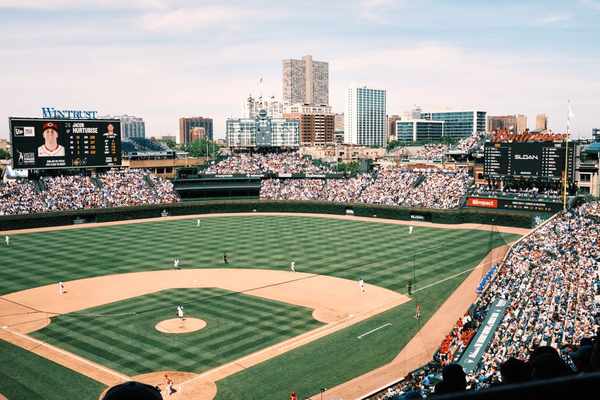
For baseball travelers, age is more than a date on a stadium plaque. The oldest MLB stadiums feel different because decades of renovations, odd dimensions, neighborhood growth, and fan traditions have accumulated on the same footprint. A game at Fenway or Wrigley can feel part sporting event and part history tour, while Kauffman Stadium and Rogers Centre show how “old” in baseball can represent very different architectural eras.
This ranking uses the original opening year of current MLB home venues in 2026. Tropicana Field therefore counts from 1990, even though the Rays arrived later.
Fenway Park, Boston Red Sox — opened 1912
Fenway Park is the oldest active MLB ballpark, and its quirks still influence play. The Green Monster turns fly balls and line drives into unusual outcomes, while the hand-operated scoreboard built into the wall keeps a piece of pre-digital baseball alive during every game.
Fenway Park history is visible in the grandstand too. Some older sections have support poles, tight rows, and sightlines that can surprise first-time visitors. A practical tip is to check the exact seat view before buying a bargain grandstand ticket. In a stadium designed long before modern sightline standards, a slightly different seat can noticeably improve the experience.
Wrigley Field, Chicago Cubs — opened 1914
Wrigley Field opened as Weeghman Park in 1914, with the Cubs moving in two years later. The Wrigley Field age puts it just behind Fenway, but the experience is distinctly Chicago: ivy-covered outfield walls, neighborhood rooftops, the red marquee, and a manual center-field scoreboard that has operated since 1937.
Major renovations have modernized the park without removing its neighborhood character. Some lower-deck support columns can still affect views, so seat research matters here as well. For a first visit, arrive early enough to walk around Wrigleyville; the streets surrounding the park are part of what makes this one of baseball’s most distinctive destinations.
Dodger Stadium, Los Angeles Dodgers — opened 1962
There is a 48-year jump from Wrigley Field to Dodger Stadium, a reminder of how few truly old parks survived the 20th century. Opened in 1962, it remains the third-oldest current major-league ballpark. Its terraced seating bowl, Chavez Ravine setting, and mountain views give it a visual identity newer retro-style parks never tried to copy.
The stadium has been modernized while retaining its mid-century shape. For visitors, the practical challenge is often getting there. Los Angeles traffic can turn a short map distance into a long trip, so build extra arrival time into game day rather than planning to reach the gates just before first pitch.
Angel Stadium, Los Angeles Angels — opened 1966
Angel Stadium debuted in 1966, making it the fourth-oldest active MLB venue. It has changed more dramatically than Fenway, Wrigley, or Dodger Stadium. The park was expanded for the NFL’s Rams and later reshaped in the late 1990s when baseball again became the primary focus.
The “Big A” sign remains its signature landmark, while the landscaped rock formation beyond the outfield reflects the later redesign. Angel Stadium shows that historic ballparks do not need to remain visually frozen in their opening decade. Some survive precisely because they adapt to new tenants, new fan expectations, and new uses.
Kauffman Stadium, Kansas City Royals — opened 1973
Kauffman Stadium is a rare survivor from an era dominated by multipurpose concrete venues. It opened as Royals Stadium in 1973 as a baseball-specific park, helping it age more gracefully than many contemporaries. Its signature feature is the 322-foot-wide water spectacular beyond the outfield, one of baseball’s most recognizable backdrops.
The K is still evolving. Before the 2026 season, the Royals moved portions of the outfield walls closer and lowered some wall heights while keeping center field at 410 feet. That blend of familiar architecture and changing field dimensions makes older parks interesting to revisit rather than simply admire as preserved landmarks.
Rogers Centre, Toronto Blue Jays — opened 1989
Rogers Centre opened in 1989 as SkyDome, a futuristic building famous for its retractable roof. Its place on this list captures a different chapter of stadium history: large all-weather venues built around engineering spectacle rather than the retro-ballpark movement that followed in the 1990s.
A major multiyear renovation beginning in 2022 transformed much of the interior into a more baseball-focused environment. For travelers who remember the original SkyDome, the contrast is part of the appeal. The building’s identity remains recognizable, but the fan experience has been substantially reworked rather than replaced.
Tropicana Field, Tampa Bay Rays — opened 1990
Tropicana Field opened in 1990, eight years before the Rays played their first season there. After Hurricane Milton damaged the roof in 2024, the Rays spent 2025 elsewhere and returned to Tropicana Field in 2026 following repairs.
The Trop’s defining quirks are overhead. Its fixed roof and suspended catwalk rings create special ground rules unlike those in open-air stadiums. A fair ball striking certain lower catwalks can be ruled a home run, while contact with upper structures may remain in play. For a ballpark traveler, that oddity is the point: the building itself can become part of the baseball conversation.
What historic ballparks offer that newer parks cannot
The appeal is not nostalgia alone. Older venues preserve design decisions that newer stadiums tend to engineer away. Fenway and Wrigley retain manual scoreboards and unusual sightlines. Dodger Stadium keeps its sweeping mid-century layout. Kauffman uses fountains as part of its identity. Rogers Centre represents late-1980s retractable-roof ambition, while Tropicana Field remains famous for rules shaped by its ceiling.
For a multi-city trip, compare parks rather than simply checking them off a list. Boston and Chicago pair the two oldest historic ballparks. Southern California pairs Dodger Stadium’s hillside design with Angel Stadium’s heavily renovated 1960s footprint. Those contrasts make the history easier to notice.
Frequently asked questions
What is the oldest MLB stadium still in use?
Fenway Park in Boston is the oldest MLB stadium still hosting major-league games. It opened in 1912 and has been the home of the Boston Red Sox ever since.
Is Wrigley Field older than Fenway Park?
No. Wrigley Field opened in 1914, two years after Fenway Park. It is the second-oldest active MLB ballpark and has hosted the Chicago Cubs since 1916.
What is the third-oldest current MLB ballpark?
Dodger Stadium is third. It opened in Los Angeles in 1962 and remains one of the clearest surviving examples of mid-century baseball stadium design.
Why is Tropicana Field ranked from 1990?
The ranking uses the stadium’s opening date, not the first season of its current MLB tenant. Tropicana Field opened in 1990 and became the Rays’ home when the franchise began play in 1998.
Why age still matters on a baseball trip
New ballparks can offer wider concourses and more polished amenities, but old stadiums offer accumulated personality. The memorable details are often the ones a modern design would eliminate: a hand-changed scoreboard number, a support pole, an unusual wall, or a catwalk that can affect a live play. For fans building a ballpark bucket list, these venues are worth visiting because their age remains visible in the game-day experience.