
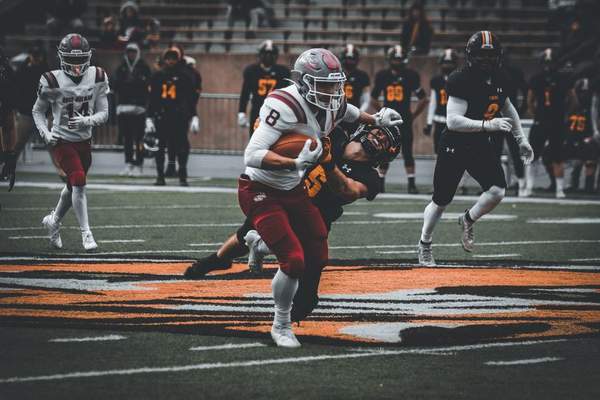
College football can make familiar betting markets feel unfamiliar. Unlike the NFL, where teams operate within a relatively narrow talent range, college matchups can feature enormous differences in roster depth, quarterback experience and resources. A favorite might dominate for three quarters, then empty its bench. A fast-paced underdog might score plenty without threatening to win. Those details matter more than the rankings beside each team’s name.
A useful college football betting strategy starts with understanding what a price asks you to predict. The goal is not simply to identify the better team. It is to decide whether the available odds reflect the matchup accurately, and to recognize when you lack enough information to make that judgment.
Start With the Three Main Betting Markets
Most college football odds appear as point spreads, totals and moneylines. Each market asks a different question, so choose the one your research can best address.
Point spreads measure the margin
A team listed at -14.5 must win by at least 15 points for its spread bet to win. The opponent at +14.5 covers by winning outright or losing by 14 or fewer. The half-point prevents a tie on that line. CFB spreads can be much larger than NFL spreads because college teams vary widely in talent.
Do not confuse a likely victory with a likely cover. A powerful favorite can win comfortably and still fall short of a demanding number. Understanding point spreads helps separate those two predictions.
Totals measure combined scoring
College totals ask whether both teams together will score over or under a posted number. If the total is 56.5, an over needs at least 57 combined points; an under wins with 56 or fewer. Pace, efficiency, defensive matchups and game script all matter. More plays create opportunities, but a quick offense that repeatedly stalls may score less than expected. Learning how over-under bets work provides a foundation for this market.
Moneylines ask only who wins
Moneyline bets remove the margin requirement. A heavy favorite typically offers a smaller potential return relative to the amount risked, while an underdog pays more because an outright win is considered less likely. Picking the obvious winner is therefore not automatically a worthwhile bet.
What Makes College Football Different?
Talent gaps extend beyond star players
The difference between two rosters is not always captured by their records. Look at opponent quality, performance in the trenches, quarterback play and the depth available behind starters. A team’s impressive scoring average may come from games against weak defenses.
Large favorites introduce another wrinkle: late substitutions. Coaches may rest starters with a comfortable lead, allowing an opponent to narrow the final margin without threatening the result. That potential backdoor cover matters when considering a large spread.
Uneven schedules distort averages
College schedules differ substantially in difficulty. Conference opponents, nonconference opponents, travel and rest can all shape performance. A team averaging 40 points against weaker competition may struggle against a disciplined defense. Compare performances against similar opponents rather than treating season averages as interchangeable.
Also look at the surrounding schedule. A rivalry game the previous week or a major conference matchup ahead may influence preparation and substitutions, although neither situation guarantees a poor performance.
Roster news changes the matchup
Injuries, transfers and quarterback changes can make earlier results less representative. Check official team information and credible local reporting before relying on an old depth chart. College injury details may be incomplete, so treat unverified rumors cautiously. A replacement quarterback could change passing depth, designed-run frequency and tempo, affecting both the spread and total.
Try a Matchup Checklist Before Making a Pick
Imagine a ranked favorite laying 21.5 points against a rebuilding opponent. It is clearly stronger, but that does not answer whether it will win by at least 22.
Ask three questions: Can the favorite control the line of scrimmage? Can the underdog sustain drives or produce explosive plays? Will the favorite keep its starters on the field late? A slow-tempo team that protects leads may struggle to cover a huge number despite dominating the game.
Suppose the same game has a total of 61.5. If the underdog struggles offensively, an over may require the favorite to supply most of the points. That is a more useful assessment than assuming a high-scoring conference always produces overs. Write down one specific reason the market’s implied expectation might be wrong. If you cannot, passing is sensible.
Watch the Price, Not Just the Team
CFB betting lines shift as sportsbooks respond to wagers, team news and wider market prices. Compare prices from licensed operators where betting is legal. Record the number when you first examine the game and check it again before making any decision.
Suppose you liked a favorite at -6.5 but the line moves to -8.5. Your opinion about the teams might be unchanged, yet the wager has become less attractive because it requires a larger margin. A move does not prove which team will win; it changes the terms of your prediction.
Remember to compare the odds attached to a line. At the common American price of -110, a bettor risks $110 to win $100 and needs to win about 52.4% of comparable bets to break even. That sportsbook margin is a reason to be selective.
Make Selectivity Part of the Strategy
Set a fixed entertainment budget that you can afford to lose. Choose modest, consistent stakes instead of raising them after a loss or increasing them because a pick feels certain. Sports betting bankroll basics can explain how to separate a wagering budget from money needed for everyday expenses.
Keep a record of each hypothetical or real selection: market, line, price, reasoning and result. Review the logic separately from the outcome. A lucky cover does not validate weak research, while a close loss does not automatically discredit a careful assessment.
Skipping a game is a legitimate decision, particularly when injury information is unclear or your expected margin matches the posted spread. Bet only where legal and age-eligible. Use spending and time limits, never chase losses, and seek support if betting becomes difficult to control.
Frequently Asked Questions
How is college football betting different from NFL betting?
The markets look similar, but college talent gaps, opponent quality and roster depth vary more dramatically. Research often requires extra attention to substitutions and uneven schedules.
Are large college football favorites safer bets?
Not necessarily. They may be likely to win outright, but a huge spread demands a huge margin. Late substitutions or conservative play can prevent a cover.
What matters most when evaluating college totals?
Consider likely possessions, offensive efficiency, opponent strength, quarterback availability, weather and game script. Season scoring averages alone can be misleading.
Should beginners follow line movement?
Track it to understand changing prices, but do not copy moves blindly. Decide whether the current number still fits your own matchup assessment.
Focus on Decisions, Not Predictions
College football offers distinctive betting questions because talent, depth and scheduling differ so much from team to team. Understand the market first, compare opponents rather than raw records, and account for roster changes and late-game coaching decisions. Above all, a strong opinion about a football game is not automatically a good bet at any price.