
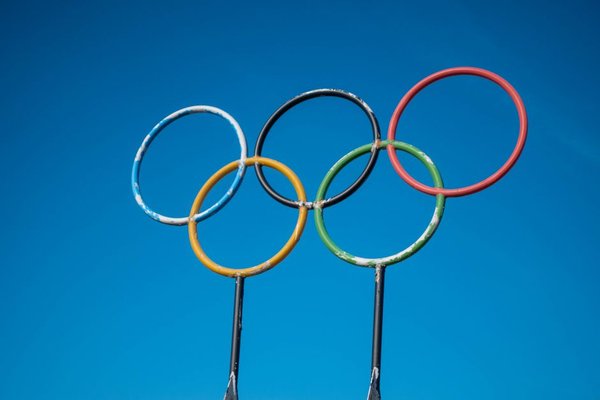
For U.S. sports fans, the easiest way to understand the Commonwealth Games vs Olympics is to start with who can compete. The Olympics are global, drawing athletes through 206 recognized National Olympic Committees. The Commonwealth Games are limited to Commonwealth Sport members, a group of 74 nations and territories. That difference in membership shapes team names, medal tables, sports programs, and the overall scale of each event.
Both are elite multi-sport events and both are normally staged on four-year cycles, but they are not smaller and larger versions of the same competition. Their governing bodies, team structures, qualification systems, and traditions are distinct.
Who Competes in Each Event?
The Olympics are organized around National Olympic Committees, or NOCs, recognized by the International Olympic Committee. That gives the Olympic Games a near-global field.
The Commonwealth Games use a different model. Commonwealth Sport works with 74 nations and territories. The total includes territories and constituent nations that compete separately rather than only sovereign states.
This creates one of the most visible commonwealth games differences. At the Olympics, athletes from England, Scotland, and Wales compete together under Team GB, while Northern Ireland athletes have sport-specific eligibility options involving Great Britain and Ireland. At the Commonwealth Games, England, Scotland, Wales, and Northern Ireland field separate teams. Jersey, Guernsey, and the Isle of Man also compete independently.
Scale and Global Reach
The Olympics operate on a much larger worldwide scale, with a broader field of countries, athletes, sports, media coverage, and commercial reach.
The Commonwealth Games are smaller but still feature world-class competition. Glasgow 2026, for example, brought together more than 3,000 athletes and Para athletes from 74 nations and territories. It used a compact 10-sport program and awarded 215 titles.
That example shows why raw size is not the whole story. A Commonwealth Games can include Olympic champions and major international rivalries while remaining far more compact than the Summer Olympics.
How the Sports Programs Differ
The Olympic program is broader and follows IOC rules, with sports, disciplines, and events approved for each edition. Host-specific additions can also appear. Los Angeles 2028, for example, includes cricket, flag football, lacrosse, squash, and baseball/softball as additional sports.
The Commonwealth Games program is more flexible. Commonwealth Sport has adjusted its framework to balance competition quality, host costs, venue availability, commercial appeal, and participation across its membership.
Glasgow 2026 illustrates that flexibility. Its 10 sports included athletics, swimming, artistic gymnastics, track cycling, netball, boxing, judo, bowls, weightlifting, and 3×3 basketball. Some sports also give the event a distinct identity. Netball and bowls are established Commonwealth Games sports but are not part of the current Olympic program.
Para Sport Is Structured Differently
The Olympic Games and Paralympic Games are separate events, governed by the IOC and International Paralympic Committee respectively, even though they are closely linked through the same host-city cycle.
The Commonwealth Games integrate selected Para events into the same Games program. Glasgow 2026 included six integrated Para sports and a record 47 Para medal events. This gives the Commonwealth Games a different event structure, with Para and non-Para competition sharing one overall Games identity.
Governance and Qualification
The IOC oversees the Olympic Movement and sets the framework for the Olympic Games. International federations establish sport-specific qualification systems, while NOCs select and enter athletes under those rules and their own policies.
Commonwealth Sport performs the top-level governing role for the Commonwealth Games, working with Commonwealth Games Associations, international federations, and host organizers. Qualification and selection also vary by sport.
In practice, an athlete may need rankings, qualifying standards, designated competition results, or quota places, followed by team selection. A strong season alone does not automatically guarantee a place at either event.
Medal Tables and Team Identity
Medal tables can look very different because the teams are organized differently. Great Britain appears as one Olympic team, while England, Scotland, Wales, and Northern Ireland compete separately in the Commonwealth Games. Australia, Canada, India, and New Zealand appear as distinct teams in both.
For that reason, medal totals should not be compared directly without context. Splitting the United Kingdom into multiple Commonwealth teams changes both the number of teams and the distribution of medals.
Which Event Is More Prestigious?
Globally, an Olympic medal generally carries greater international prestige because the competition pool is wider and the Olympic Games have unmatched worldwide visibility. But prestige also depends on the sport.
For a netball player, the Commonwealth Games can be one of the biggest available stages because netball is not currently an Olympic sport. The better question is therefore not which event is simply “better,” but which represents the strongest competitive stage for a particular athlete and sport.
Commonwealth Games vs Olympics at a Glance
The simplest olympics comparison is this: the Olympics are global and larger, while the Commonwealth Games are membership-based and more flexible in scale and sport selection. The Olympics use NOCs and a worldwide field. The Commonwealth Games use Commonwealth nations and territories, including teams that are grouped differently at the Olympics. The Commonwealth Games also integrate Para events within the same program, while the Paralympics are a separate event.
Readers exploring the wider topic may also want to compare Olympic sports explained, major multi-sport events, and how international sports qualification works.
FAQ
Are the Commonwealth Games part of the Olympics?
No. They are separate multi-sport events run by different organizations. The Olympics are governed by the IOC, while the Commonwealth Games are governed by Commonwealth Sport.
Can an athlete compete in both?
Yes. Many elite athletes compete in both if they are eligible, qualify, and are selected by the relevant team organizations.
Why does England compete separately at the Commonwealth Games?
Commonwealth Games membership allows England, Scotland, Wales, and Northern Ireland to compete as separate teams. At the Olympics, athletes from Great Britain and Northern Ireland generally compete under Team GB, subject to sport-specific eligibility arrangements.
Are all Olympic sports in the Commonwealth Games?
No. The Commonwealth Games have their own sports program, which can vary by edition. Some Olympic sports may be absent, while sports such as netball and bowls can be prominent Commonwealth events.
Conclusion
The commonwealth vs olympics comparison becomes clearer once membership is separated from scale. The Olympics bring together the world through 206 NOCs and a broad international sports program. The Commonwealth Games bring together 74 nations and territories, often with distinct team identities and a more flexible schedule. Both showcase elite competition, but their histories, structures, and sporting priorities give each event a different character.