A snowboard boot can feel comfortable in a shop yet become frustrating halfway down a mountain. If your heel slides when you turn, your toes go numb or you keep tightening the laces, the problem may be fit rather than technique. This snowboard boots fit guide explains how to assess sizing, heel hold, liner comfort and flex before choosing a pair.
What Proper Snowboard Boot Fit Feels Like
The goal is firm, even contact without pain. New boots should feel noticeably snug around the foot and ankle, but they should not pinch your forefoot or squeeze the top of your foot. Supported is good; trapped is not.
Stand upright in fully fastened boots. Your longest toes should lightly touch the liner’s front. Then bend your knees into a riding stance. That pressure should ease as your heels settle backward, although your toes may still brush the liner. Curled, crushed or painful toes suggest the boot is too short or the shape is wrong. No contact at all may signal excess length.
Start Snowboard Boot Sizing With Your Feet
Street-shoe size is only a starting point. Snowboard boot sizing varies between brands and models. Measure both feet while standing, preferably later in the day, and use the longer foot to consult the manufacturer’s size chart. Mondopoint measurements in centimetres offer another useful starting reference.
Foot shape matters as much as length. A wide forefoot, narrow heel or high instep can change which boot feels secure. Sizing up to relieve a width problem may create unwanted heel movement, so try a wider or differently shaped model instead.
Wear Your Actual Snowboard Socks
Use one pair of thin or medium-weight, moisture-wicking snowboard socks when testing boots. Thick socks can make a suitable boot feel cramped and push you into buying unnecessary extra length. Multiple sock layers also create folds and pressure points.
How to Check Snowboard Heel Lift
Snowboard heel lift occurs when your heel rises inside the boot as you flex forward. Excessive movement delays the transfer of pressure to your toeside edge and can cause rubbing. Tightening every lace as hard as possible rarely fixes a mismatched heel pocket.
Fasten the liner and outer boot comfortably. Stand with your feet roughly shoulder-width apart, flex your knees repeatedly and gently shift pressure from heels to toes. Notice whether your heel stays seated. A little movement can occur depending on the design, but obvious upward sliding calls for a different fit.
Imagine trying two boots marked the same size. The first feels plush while seated, but your heel pops up during three knee bends. The second holds your heel steadily without crushing your toes. The second is likely the better choice, even if it feels firmer initially.
Lacing and Ankle Shape Make a Difference
Heel pockets, ankle padding and liner shape influence hold. Traditional laces provide local adjustment, while some speed-lacing and BOA systems allow separate tension across upper and lower zones. Secure the ankle without crushing the forefoot. If tightening causes numbness, reassess the shape rather than pulling harder.
Account for Liner Break-In
Snowboard boot liners compress and gradually conform to your feet, a process riders call packing out. A loose brand-new boot is likely to become roomier. Aim for a snug first fit that grows more comfortable, not a slipper-like fit that grows sloppy.
Break-in should never mean enduring sharp pain, persistent tingling or circulation problems. Some liners can be heat-molded by a trained fitter, who can also check whether a footbed or other adjustment is appropriate. Heat molding cannot reliably turn an oversized shell into the right size.
Choose Flex for Your Riding Style
When comparing boot flex, snowboard manufacturers commonly describe boots as soft, medium or stiff. Soft boots permit more ankle movement and appeal to riders learning the basics or enjoying playful freestyle. Medium boots balance mobility and support. Stiff boots generally offer more immediate response for fast, aggressive turns.
Flex scales are not standardized between brands, and the best choice depends on your weight, strength and preferences. Remember that stiffness cannot correct poor fit: even a highly responsive boot wastes movement if your heel slides.
A Better In-Store Fit Test
Do not decide after a quick seated try-on. Give each promising pair enough time to reveal pressure points.
First, put on your riding socks, seat your heel at the back of the boot and fasten the liner before tightening the outer shell. Check toe contact while upright, then bend into a snowboard stance. Repeat several controlled knee bends and monitor heel movement. Walk and stand in the boots for 15 to 20 minutes if the shop allows it. Finally, compare another shape or size rather than assuming the first tolerable pair is right.
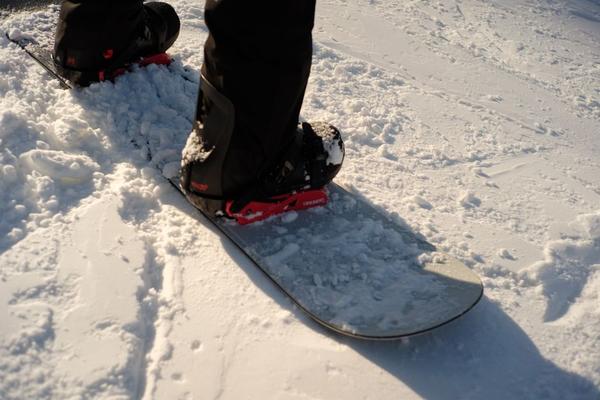
Check your boot and binding compatibility, too. A boot should sit properly in its binding without awkward strap placement or unusual overhang. Boot footprints vary even between identical labelled sizes. Choose boots that fit your feet first, then fine-tune your binding and snowboard stance around them.
Fit Problems You Should Not Ignore
Toes Still Hurt in a Riding Stance
The boot may be too short, too narrow or poorly positioned around your heel. Reseat your foot and try a different shape. Do not depend on the toe box stretching enough to eliminate pain.
Your Heel Lifts Despite Tight Laces
The heel pocket may be too roomy or the boot too long. Try another model with better ankle hold. Consider a smaller size only if toe space remains correct. Crushing your instep to hold your heel down is not a solution.
Your Feet Become Numb
Excess tension, inadequate width, pressure over the instep or poor foot support may be responsible. Loosen the boot and reassess. Persistent numbness warrants help from a qualified boot fitter or healthcare professional.
Frequently Asked Questions
Should Snowboard Boots Feel Tight at First?
They should feel snug, not painful. Light toe contact is normal when standing, and liners usually soften with use. Sharp pressure or tingling is not a necessary part of break-in.
How Much Snowboard Heel Lift Is Acceptable?
Aim for a heel that remains seated as you flex into your riding stance. Tiny movement may vary by model, but noticeable sliding means the fit needs attention.
Should I Size Up for Thick Socks?
Usually not. Select appropriate snowboard socks first, then fit the boots around them. Buying extra length can compromise heel hold once the liner packs out.
Can Heat Molding Fix Boots That Are Too Big?
Heat molding can help a compatible liner conform to your foot, but it does not reliably correct an oversized shell. Get the basic length and shape right first.
The Right Fit Should Hold Up in Motion
A good snowboard boot fit is not defined by its size label or softness while sitting. Look for gentle toe contact, stable heels, even pressure and flex that suits how you ride. Spending extra time moving in each pair can make the difference between fighting your equipment and controlling your board confidently.